

Creating a Speak-Up Culture: What Really Works
/There's a phrase that some people love: "Don't come to me with a problem unless you have a solution."
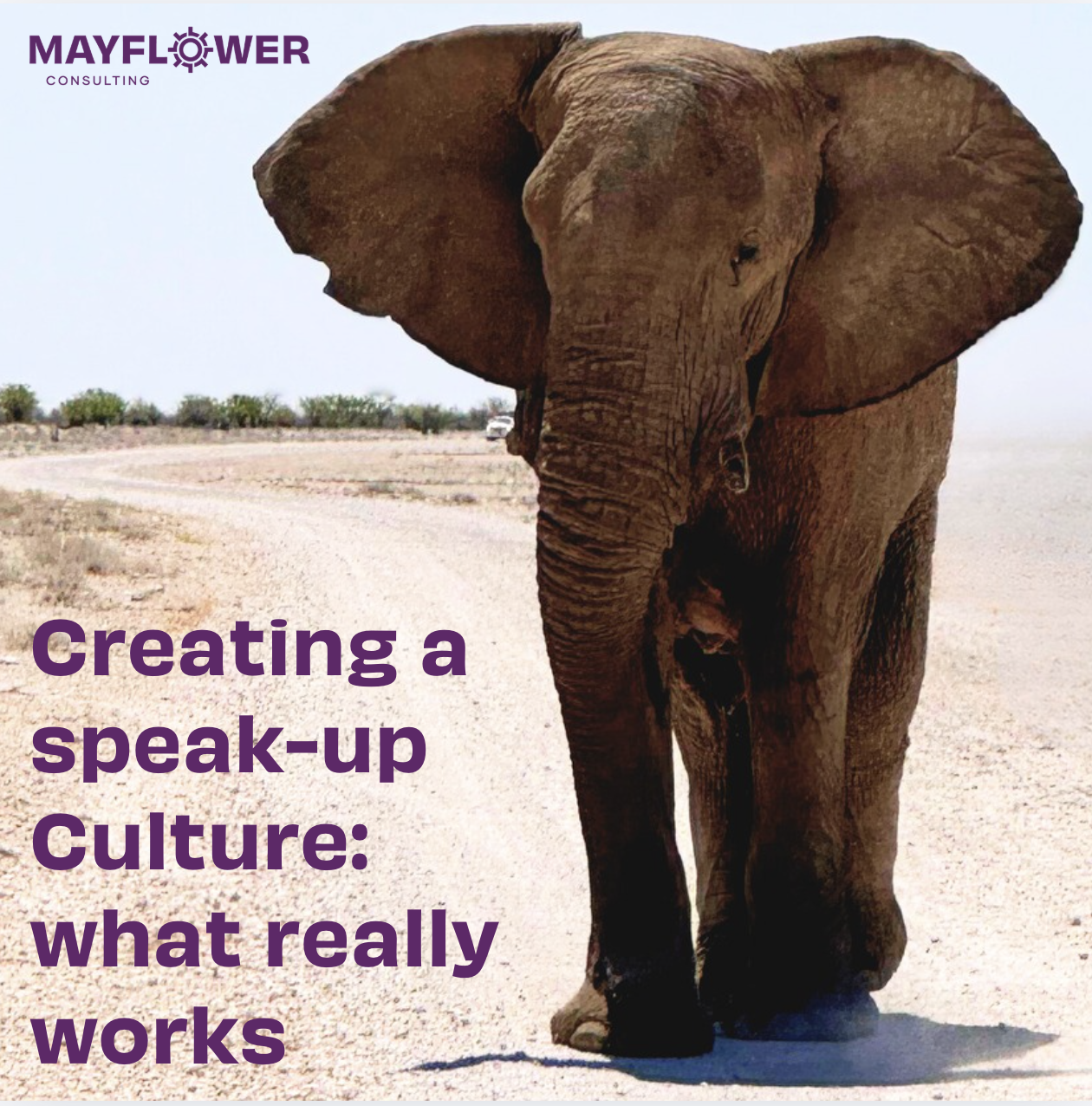
It might sound like strong leadership but it really isn't. What it does do, is teach people to stay quiet unless they've already figured everything out. And since we're human, and we rarely have everything figured out, the problems stop coming up. Instead, they go underground and fester. Three years later, you have an enforceable undertaking and a culture review. Fun times.
This was one of the threads running through our recent ASFA National Legislation Discussion Group session, where Andrew Brown, co-founder of Adaptive Cultures, led a conversation on creating a genuine speak-up culture. Two things really stood out for me:
The real problem isn't fear - it's learned futility
Most organisations frame speak-up culture as a psychological safety problem. Get people feeling safe enough and they'll speak up. The See Say Do campaign goes up, the incident reporting system gets a refresh and everyone attends the lunch-and-learn.
And then? Crickets.
The deeper problem isn't so much fear of consequences, it's that people have watched what happens when someone does speak up. They raised the issue and nothing happened. They raised it again and still nothing. Eventually, they stopped, not because they were afraid, but because they'd done a rational calculation and concluded it wasn't worth the effort.
Andrew called this the say-do gap, the distance between what organisations say they want and what actually happens when someone raises something difficult. That gap is the single biggest inhibitor he's observed across 15+ years working in this space. And once the story starts circulating that "raising things doesn't go anywhere here," it becomes very hard to shift. It gets into the drinking water of the organisation and stays there, long after the original event.
The chat in our session confirmed it, repeatedly. "Raised it. Nothing happened." "Can't see change occurring." "Nothing ever happens to make a change." These weren't one-off experiences, they were patterns. And they exist in organisations that genuinely believe they have a speak-up culture.
A campaign is not a culture
The second thing most organisations get wrong is treating awareness campaigns as a proxy for genuine behaviour change. See Say Do, speak up initiatives and lunch-and-learns on psychological safety. These aren't wrong but these are a starting point, not an outcome. And using them as a substitute for the harder work is one of the most common traps Andrew sees.
The question isn't whether you have a speak-up campaign, it's whether speaking up is embedded in how your teams operate day to day. What happens in the post-incident review, are the learnings shared, or do they sit in a document somewhere? When someone raises something uncomfortable, what does the next week look like for them? Do team meetings have an easy way to surface issues, or is that reserved for the formal incident process?
That's where culture lives, not in the campaign.
Three levers, not one
Genuine speak-up culture requires change on three fronts simultaneously:
the individual (how you show up, how you listen, whether you're operating with a learner mindset or a knower mindset)
the social (the relationships, stories, and ways of working that shape how information flows), and
the structural (the systems, incentives, and processes that either make it easy to raise things or quietly penalise it).
Most organisations focus heavily on the structural, policies, reporting mechanisms, KPIs, and lightly on the individual and social. But if senior leaders aren't genuinely role-modelling open communication, if past stories about being shut down are still circulating and if people who raise issues automatically become the person responsible for fixing them, no amount of policy design will compensate.
So how do you influence in an environment when you can see the problem but you’re not in a position to just ‘make the change’. Andrew suggests you start with:
what you can influence (influence the influencers)
find a safe topic /place to run a pilot and set the first pilot for success (for example run a Post Implementation Review on a particular challenge where speaking up and exploring learnings would be a big plus, but it wouldn’t be so contentious that people wouldn’t feel safe)
use the learnings from your pilot to start cascading out further - test-pilot-iterate-expand
Final question
What is one thing you could influence this week that would progress your speak up culture?
Many thanks to Andrew Brown from Adaptive Cultures for a thought-provoking session, and to all members of the ASFA National Legislation Discussion Group for the conversation.